

Dance guide through Modra
Will you dance?
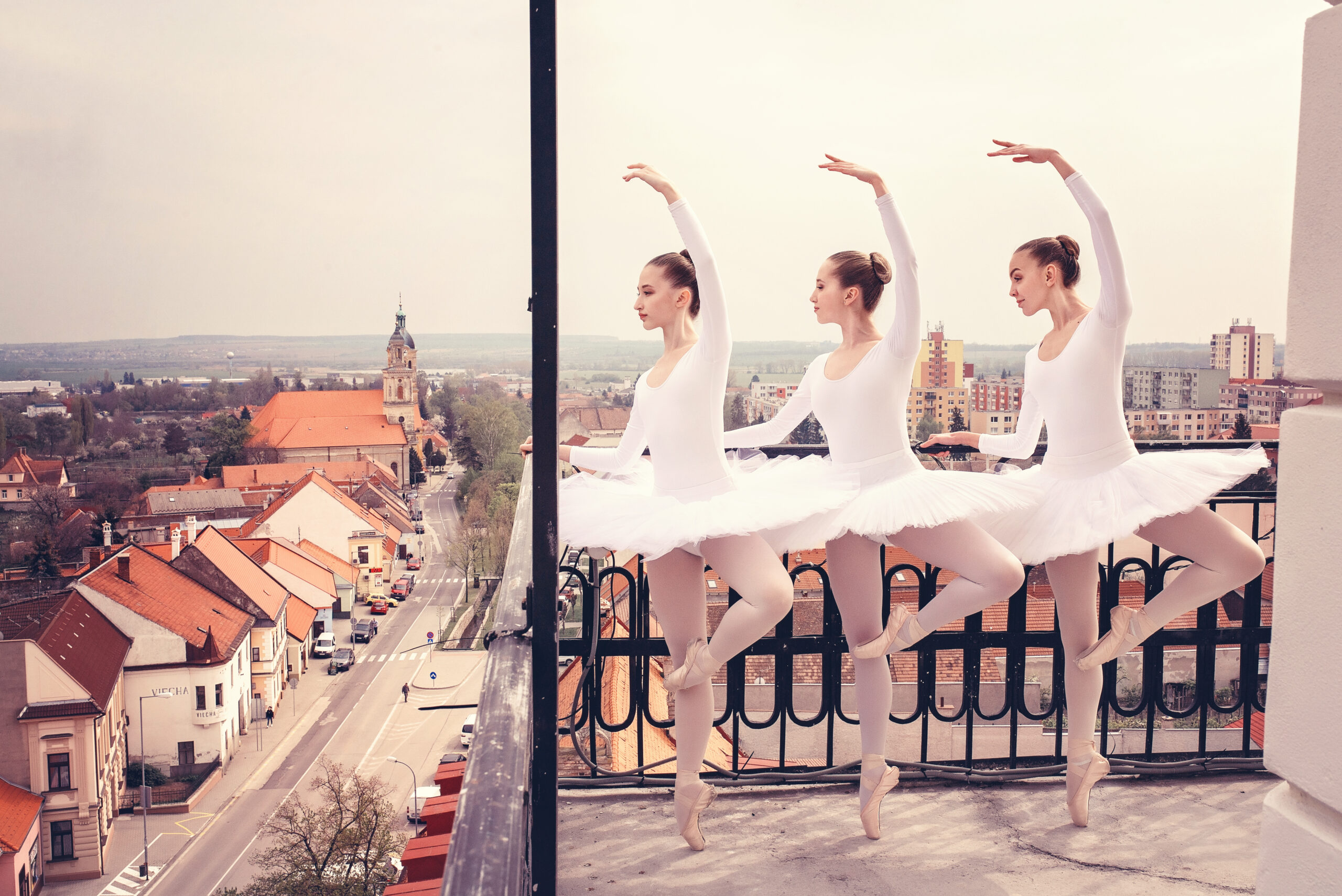
Additional Sights, tourist destinations, and attractions of Modra presented in an unconventional way – through the lens of photographer Sandra Benčičová, in combination with the dance art of the Slovak National Ballet and SĽUK. We recommend, however, that you come and experience for yourself the genius loci of these places.
Bašta
The free royal town of Modra was protected by fortifications in the 17th century, built from 1610 over an incredible 36 years. The structure included three main gates – Horná (Upper), Dolná (Lower), and Viedenská (Vienna Gate) – along with two defensive towers: northern and southern bastions. These were cylindrical, four-story towers or rotundas standing at the highest points of the town walls, serving as observation and control points.
From the original fortifications, the Upper Gate – now hosting various exhibitions – and the Northern Bastion, home to the Ignác Bizmayer Gallery, have survived. The gallery showcases a representative selection of works by this leading figure of figurative ceramics in Slovakia. In 2012, the bastion became part of the Museum of Slovak Ceramic Sculpture.
Opening hours: www.snm.sk

Calvary and the ceramic way of the cross
The Calvary, built in 1814, is approached via a unique ceramic Way of the Cross reflecting Modra’s cultural identity. Ceramic tiles depict the individual stations of Jesus Christ’s journey to the crucifixion, created by master ceramists Marián Liška, Jozef Frank, Igor Mesík, Ján Viglaš, and Ján Pečuk. During sunset, this magical place offers peace and solace to all who seek it.
GPS coordinates: 48° 19’ 44.53’’ N, 17° 17’ 50.29’’ E

Town tower
The sky above the tower is pierced by a two-armed cross atop a metal halberd shaped like a six-pointed star with a crescent on a hollow metal orb. In Modra, it is said that the Ottoman emblem was placed there to mislead enemy forces into thinking the town was already under Turkish control. Another interpretation suggests the double cross on the crescent, with the star atop the tower, symbolizes the defeat of the Ottoman army, the liberation of Hungary, and the triumph of Christianity over Islam.
Once part of the town’s fortifications, the tower is now integrated with the Church of St. Stephen the King. This 17th-century landmark stands 55 meters tall with six floors, offering panoramic views of Modra, its charming courtyards, gardens ending at the walls, vineyards, and the Little Carpathians.
More info: tic@modra.sk, +421 33 6908 324
Slovak folc majolica
Vineyards and pottery clay are the true wealth of Modra, historically connecting the town with wine, viticulture, and pottery. The potters’ guild was established in 1636, and the first Ceramic Industrial School in 1883. Modra ceramics and the Modra Ceramic Workshop were well-known throughout the Kingdom of Hungary.
Today, Modra majolica and its ornamental designs are listed in the Representative List of Intangible Cultural Heritage of Slovakia. Each piece is hand-thrown, fired, and painted by master ceramists. Modra majolica is gaining popularity in modern design and urban markets as well as traditional pottery fairs.
The Slovak folk majolica studio, producing traditional ceramics for 136 years, recently launched a new design collection called “Skratky” and three new applied majolica collections: “Bordový lístok,” “Fialový klas,” and “Modré pierko.” You can view this majolica firsthand during an excursion.
Reservations: majolika@majolika.sk, +421 911 980 105

Green forest - the memorial
Zelený les (Green Forest) commemorates the past and the memory of Jakub Grünwald, a Jewish merchant whose home and shop on Národná Street in Modra-Kráľová were confiscated in 1941. His family was deported and murdered in concentration camps; only two of his seven children survived.
Thanks to the initiative of Modra’s Evangelical community and volunteer work, the site became a memorial. Today, it hosts regular concerts of Jewish music and exhibitions on Holocaust and racial violence remembrance day.
The structure, consisting of a garden and a transparent steel frame entwined with young vines, symbolizes the shared heritage of Jews and Christians. It was nominated for the ARCH 2018 award.
Location: Národná Street 29, Modra-Kráľová


@mesto.modra
